
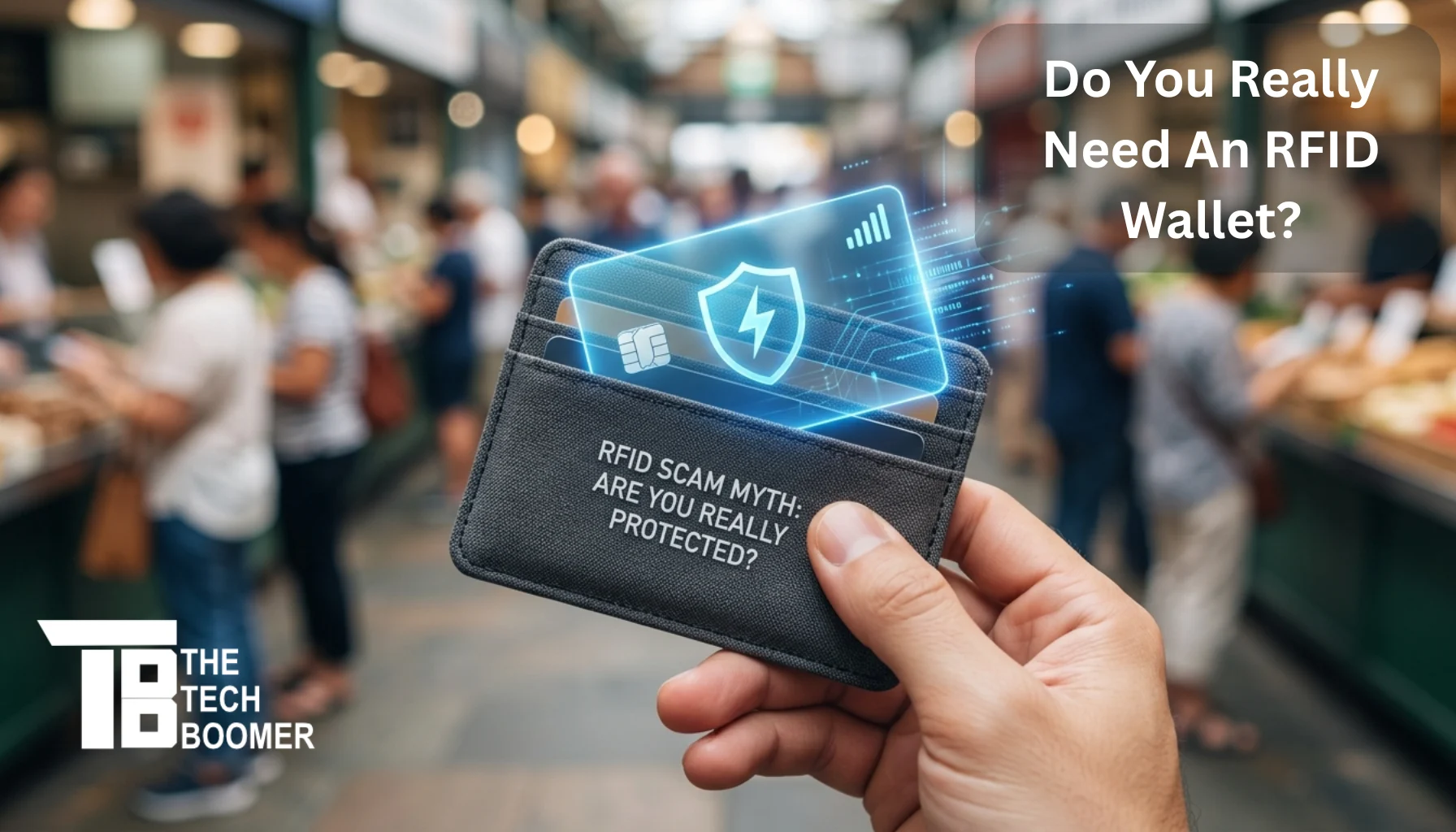
If you have walked through a department store or browsed Amazon recently, you have likely seen them: sleek wallets, heavy-duty purses, and individual card sleeves proudly bearing the label “RFID-Protected.” The marketing pitches behind these products paint a scary picture of high-tech pickpockets using hidden handheld scanners to steal your credit card numbers or personal details simply by walking past you in a crowded airport or grocery store.
But is this “RFID skimming” a real danger, or are these specialty wallets just expensive pieces of security theater?
Before you spend your hard-earned money on anti-skimming gear, let’s separate the high-tech myths from the actual data.
What is RFID, and How Does It Work?

TOZO T10 Wireless Bluetooth Earbuds
The Tech Boomer recommends these wireless bluetooth earbuds. Clear, crisp sound—plus they’re easy on the wallet!
View on Amazon →This post may contain affiliate links. As an Amazon Associate, I earn from qualifying purchases.
Radio-Frequency Identification (RFID) uses radio waves to capture and read information stored on an electronic chip attached to an object. Businesses have safely used this technology for decades to track warehouse inventory, manage shipping containers, or operate office building security badges.
In recent years, financial institutions integrated this technology into payment cards to offer “contactless” payments—allowing you to make a purchase with a quick wave or tap against a checkout terminal.
The Good News: Your Contactless Cards Are Already Protected
The primary reason you don’t need to rush out and buy an RFID-blocking wallet comes down to the security features already baked into your credit and debit cards by major issuers:
- One-Time Encryption Codes: Unlike old-school magnetic stripes that openly store your permanent card number, every time you tap to pay, the RFID card generates a unique transaction counter and cryptogram that the payment network uses to verify the tap is authentic and originates from the physical card. Even if a scammer managed to intercept that signal, the transaction counter would be completely useless to them for future purchases, and they could not use it to clone your physical card.
(Note: Tap-To-Pay on your phone actually transmits a different number than your actual credit card. Read more about paying with your phone here.) - Some Cards Lack the Signal: It’s worth noting that some standard chip-embedded cards (the ones you have to insert into a reader) don’t transmit an open radio signal at all. They require physical contact inside the machine to work.
- Extremely Limited Range: To successfully read a contactless card, a scanner must be incredibly close—typically a maximum of two to four inches away—in an environment entirely free of physical barriers. If your card is buried inside a regular leather wallet, a heavy purse, or a thick winter coat pocket, the radio signal is already obstructed enough to block a scammer’s portable reader.
- Signal Confusion: If you carry more than one RFID card in your wallet, their signals will clash when a reader attempts to scan them simultaneously. This digital “traffic jam” prevents a scanner from reading any of the cards clearly.
Why RFID Skimming is a Non Starter for Modern Thieves
From a criminal’s perspective, RFID skimming is a technology that just doesn’t work. It would require a thief to physically wander through crowds, awkwardly bumping into strangers or hovering mere inches away from their pockets, all while hoping the target happens to be carrying only one RFID card that they could get close enough to that might return a signal. A signal that they would not be able to use again.
Cybercriminals look for high-volume, low-effort targets. It is infinitely faster and safer for identity thieves to steal millions of credit card numbers at once via digital internet scams, data breaches, phishing emails, or by purchasing stolen credentials in bulk on the dark web.
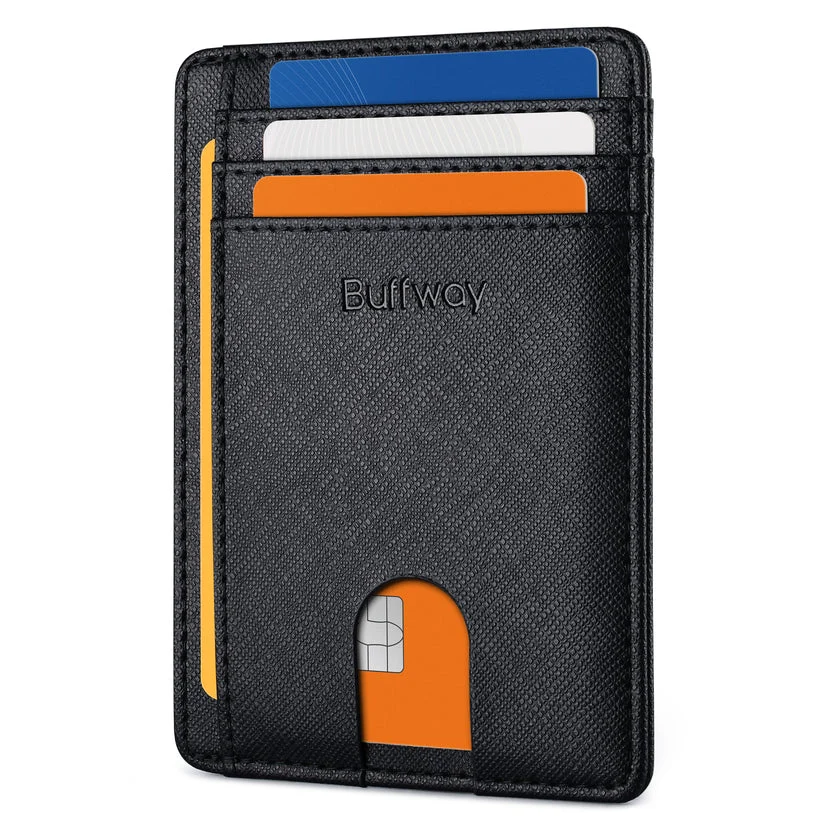
This is my wallet. Although it is supposedly RFID blocking, I bought it because it was cheap and very slim.
The Cheap, Household Hack
If you still feel strongly about adding an extra layer of physical security to a card, you do not need to buy a specialty designer wallet. Researchers have found that simply wrapping your card in a small piece of standard household aluminum foil works perfectly as a makeshift shield against radio waves.
How to Focus on Real Credit Card Protection Instead
While high-tech electronic pickpocketing shouldn’t keep you up at night, traditional credit card fraud and identity theft remain very real threats. Instead of upgrading your wallet, consider adopting these far more effective security habits:
- Activate Mobile and Account Alerts: Set up automatic text or email notifications through your bank or credit card app. These alerts notify you instantly every time a transaction occurs on your account, allowing you to catch and flag suspicious charges the moment they happen.
- Review Financial Statements Regularly: Take a few minutes every month to carefully look over your bank statements and routinely check your credit reports for unfamiliar activity or newly opened accounts.
- Report Discrepancies Immediately: If you spot unauthorized activity or notice your physical wallet has gone missing, call your financial institution right away. Acting quickly allows your bank to freeze or cancel the compromised cards, and most major issuers offer robust zero-liability policies that protect you from paying for fraudulent charges.
As always, if you have a question about this or any other post, please leave a comment below, or you can email me at larry@thetechboomer.com.

OTC Hearing Aids for Seniors
OTC Hearing Aids for Seniors, Hearing Aid Amplifiers Devices Rechargeable with Noise Cancelling, Superior Sound Quality for Adults Women Men Hearing Loss, Auto On/Off
View on Amazon →This post may contain affiliate links. As an Amazon Associate, I earn from qualifying purchases.